

how to be extremely disciplined
science of discipline through neuroplasticity

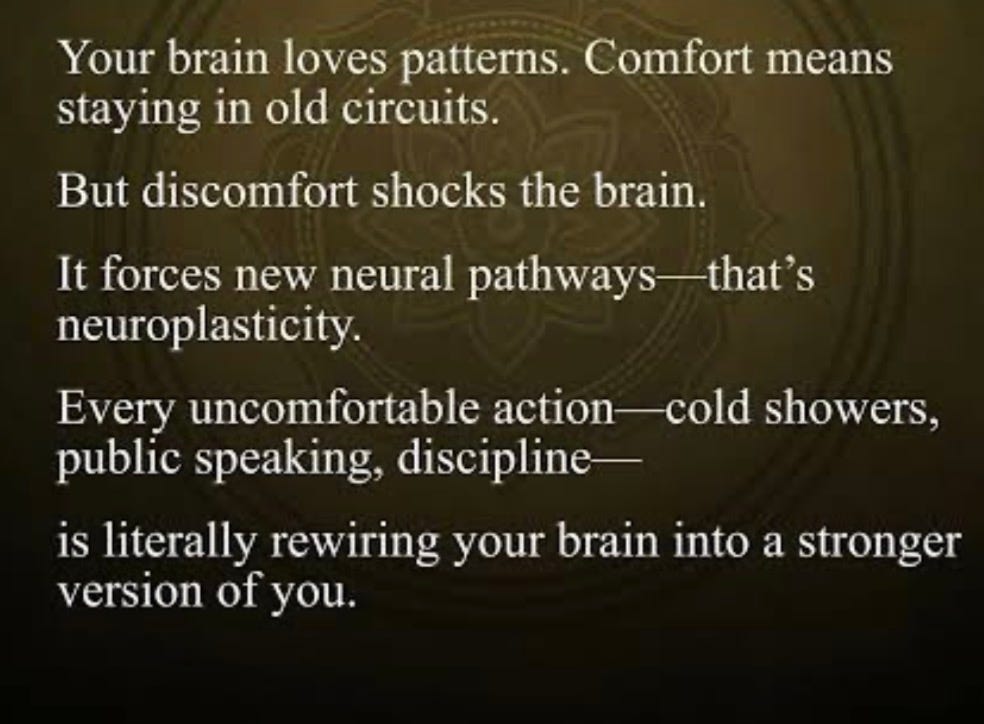
Discipline is a skill that can be built through neuroplasticity: our brains ability to rewire itself and create new neural pathways.
This is how to start building some serious discipline:

The brains ability to focus is enhanced by forcing it to focus.
The brains ability to do hard work is enhanced by forcing it to do hard work.
Repetition is always going to rewire!
The more you do something, the better you’re going to get at it. The more you procrastinate, stay lazy and take shortcuts, the better you’re going to get at it. Your brain loves patterns and is constantly creating patterns for you all day long, but once a pattern becomes deeply rooted enough in your brain it becomes automatic. Your brain loves comfortability and predictability, so you switching up the pattern is not going to be super comfortable at first. That’s why staying consistent and reinforcing new patterns is key.
1. Start asking yourself “what would a disciplined person do?” and then do it. The brain will start to rewire itself to align with that.
“What would the best version of me do?” “What would the most disciplined version of me do?” “If I was giving a friend advice who was trying to build discipline, what would I tell them?”
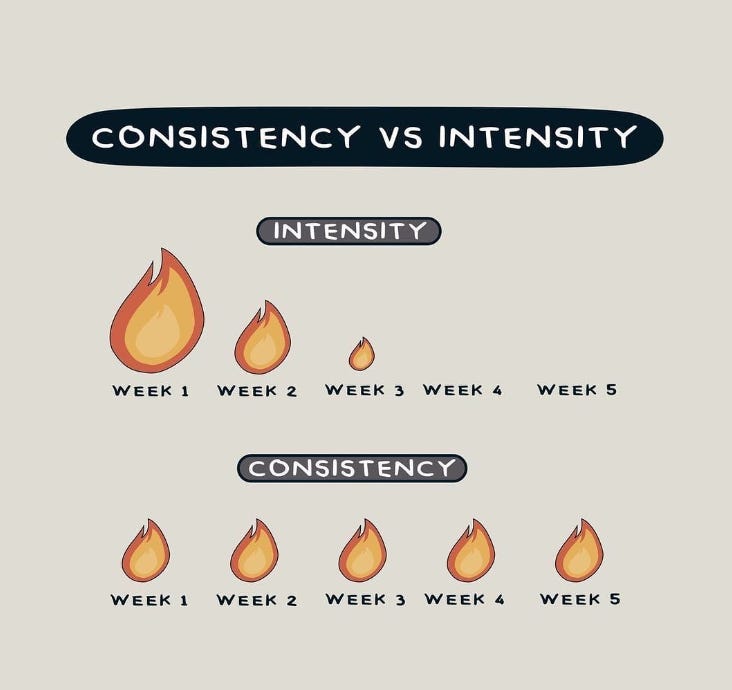
2. Prioritize consistency over dramatic shifts.
This helps set you up for success instead of reaching for things that are too extreme and unachievable and then you end up feeling burnt out and like you failed.
If you work out for 8 hours a day, once a month, you will see nothing.
If you workout for 20 minutes a day, everyday, you will see results.
Start with “I’m going to start getting up earlier” and then be consistent with it. Not “I’m going to start getting up earlier, start doing 2 workouts a day, change everything about my routine, get a new job, change my name and shave my head”. The brain’s not going to like that enough to stay consistent with that.
Define failure as a lack of consistency, not a lack of results!
3. Learn to reward the effort, not the outcome.
When we trigger the release of dopamine when we achieve something, we feel rewarded and happy and we reinforce the pattern by doing so for these big events like getting engaged, getting promoted, buying a house, these big things that don’t happen everyday, you’re rewarding the outcome, not the effort.
The brain is always going to repeat the behavior it feels rewarded for. If you’re only rewarding it for the outcome, that’s not something it can repeat everyday. When dopamine is released, it’s the brains way of saying “do that again”. You want to train the brain to “do that again” with effort and consistent daily work. Not this big outcome that happens every once in a while.
Reward yourself for little wins to stay consistent!
4. It’s not something you do; it’s something you just are
It’s my personal belief that women are not as naturally inclined to be as rigid and structured as men. I have no science to back this, just my personal belief. Something I find helpful is deciding that discipline is something that I do, it’s just something that I am. I set up implementation intentions, which was a concept created by Dr. Peter Gollwitzer for students. It’s an If-Then statement that you preordain before you begin tasks to help set you up for success.
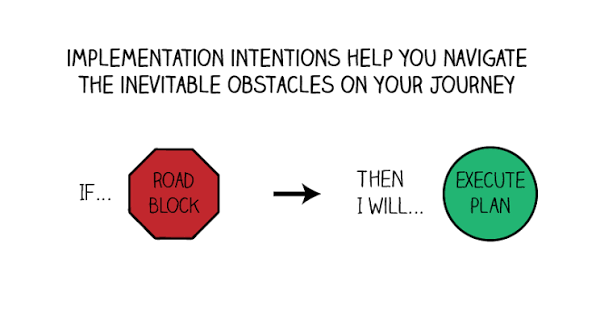
So, if I wake up not feeling like myself or I’m tired, whatever. I’ll say “If I’m feeling burnt out, then I will go on a 20 minute walk”
“If I’m feeling emotional, then I will journal for 5 minutes”
“If I’m feeling exhausted, then I will do a non sleep deep rest” By the way, everyone should try this:
Be just as disciplined about the rest and recovery as you are the work! You can’t reach max productivity at the work, if you’re not reaching max productivity at the recovery.
Repetition rewires, stay consistent !
Discipline isn’t punishment.
It’s how I learn rhythm.
Repetition is my devotion in motion. Thank you
Great read, I think the biggest problem to me is in the word discipline, over the years it has become a toxic word in my vocabulary, because how inflexible and strict I become. However I’ve found that changing the word to “devotion” has help me come back to discipline with fresh eyes and an open mind